
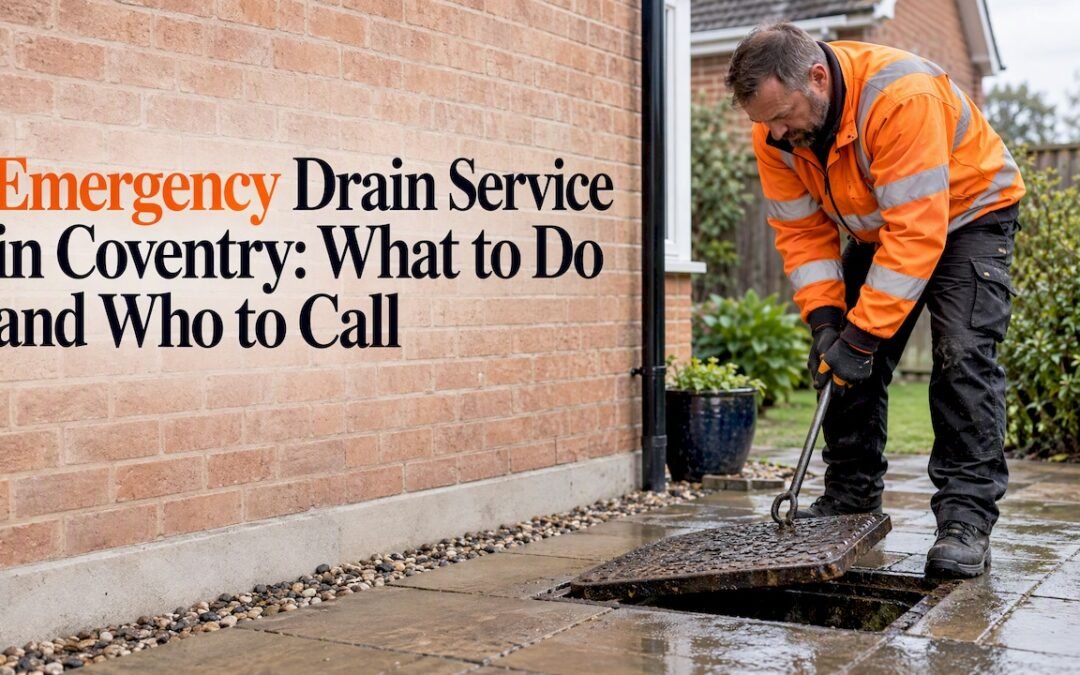
If sewage is backing up, a toilet will not flush or a manhole is overflowing, you need an emergency drain service now, and the first job is working out whose drain it is. Blockages inside your property boundary are yours to fix, so call a local drainage company. Blockages in the public sewer belong to your water company. We are a Coventry-based drainage company, and this guide covers how to tell the difference, how to stay safe while you wait and what a good emergency visit looks like.
TL;DR
- Sewage backing up, a toilet that will not flush, overflowing manholes and persistent bad smells are signs of a blocked drain that should not wait.
- Drains that serve only your property are generally your responsibility. Large public sewers under roads and pavements belong to the water company.
- While you wait, keep people and pets away from contaminated areas, disinfect shoes, wash your hands and call your insurer.
- A CCTV survey shows the cause of the blockage before any repair, so you avoid unnecessary digging.
- We cover Coventry, Nuneaton, Hinckley and surrounding areas and give clear advice before any work starts.
Table of Contents
- What counts as a drainage emergency
- Whose drain is it? Check before you pay
- What to do while you wait for help
- How quickly can you expect help?
- What happens on an emergency visit
- Common causes we deal with
- What affects the price
- Our perspective
- Emergency drain help across Coventry and Warwickshire
- Preventing the next emergency
- FAQ
- Sources
What counts as a drainage emergency
Not every slow sink is an emergency. Some situations should not wait until tomorrow.
Call an emergency service when:
- Waste or sewage is coming back up through a toilet, shower, bath or floor drain.
- A manhole or gully in your garden or driveway is overflowing.
- Several fixtures are blocked at once, which often points to the main drain rather than one trap.
- Toilets are flushing very slowly and there is a persistent foul smell.
- The property cannot be used safely, for example a business kitchen or a rental with no working toilet.
The consumer body CCW lists bad smells, slow-flushing toilets and waste or sewage backing up as signs of a blocked pipe or drain. For problems within your property boundary, it advises calling a plumber or an independent drain clearing company.
A single slow-draining basin is usually not urgent. Hair, soap and grease build up gradually. It is worth sorting out soon, but you can book a normal appointment rather than an emergency call-out.
Whose drain is it? Check before you pay
This question saves people money, so it is worth a minute before you call anyone.
According to CCW, homeowners are responsible for drains that serve their property and lie beneath the property, garden or driveway. Wastewater companies are responsible for the large sewers normally found under roads or pavements.
There is one important detail for England. Since October 2011, responsibility for private shared sewers and lateral drains transferred to water and sewerage companies. A lateral drain is the part of your drain that lies outside your property boundary. So a blockage shared with neighbours, or beyond your boundary, is often not yours to pay for.
Here is a practical way to sort it out:
- Look at where the problem shows. If only one property is affected, the fault is probably on your own pipework.
- Ask neighbours whether they have the same problem. If they do, the blockage may be in a shared or public pipe.
- If sewage is flooding your home or garden and you suspect a public sewer, report it to your water company. Water companies run helplines for this. For example, Northumbrian Water asks customers to report sewer flooding in the home or garden immediately to its 24-hour line. Check your own supplier’s page for its number.
- If it is on your own pipework, call a drainage company.
If you are unsure, a CCTV survey of the drain can show where the blockage sits and what it is. That is useful evidence if you need to go back to the water company. Water companies also begin by working out whether an asset is theirs. Thames Water’s code of practice for private blockages says its investigation focuses on that question before it offers or charges for clearance.
What to do while you wait for help
Sewage is a health risk. Treat the area as contaminated until it has been cleaned properly.
- Keep people and pets away. Southern Water advises keeping yourself, children and pets out of the contaminated area, washing and disinfecting shoes, and washing your hands.
- Stop adding water. Avoid flushing toilets, running taps or using the washing machine and dishwasher. Every litre you send down goes to the same blocked pipe.
- Call your insurer. Thames Water notes that your insurer may arrange a professional clean, replace damaged items and help find somewhere to stay. Ask about this early, and take photos of the damage.
- Do not pour chemicals down the drain. Strong products can make the blockage harder to deal with and are unpleasant for an engineer working on the drain afterwards.
- Open windows if there is a strong smell, and keep the affected room closed off from the rest of the home.
If anyone is unwell after contact with sewage, speak to a GP or NHS 111.
How quickly can you expect help?
There is no single national response time for private drainage firms. Arrival depends on how many emergencies are running at once, how far the engineer is from you, and the time of day. This is where a local company helps: engineers who are already working in your area can reach you faster than a call centre sending someone from another city.
Water companies publish their own targets for public sewer problems. As examples, Northumbrian Water aims to visit within two hours for internal flooding and four hours for external flooding, though severe weather can delay this. Northern Ireland Water aims to unblock public sewers within 8 hours if reported before 2pm, or by midday the following day if reported later. These are different companies in different regions, so use them as a benchmark rather than a promise for Coventry.
Regulators expect speed where it matters most. Ofwat and CCW have called on companies to respond quickly to incidents, particularly when sewage is in people’s homes.
When you ring any emergency drain company, ask three things:
- Roughly how long until an engineer arrives?
- Is the call-out charge different out of hours, and how is the work priced after that?
- Will the engineer show you what is wrong before recommending a repair?
Our emergency call-outs are handled by local Coventry engineers, so you speak to the people who will actually attend.
What happens on an emergency visit
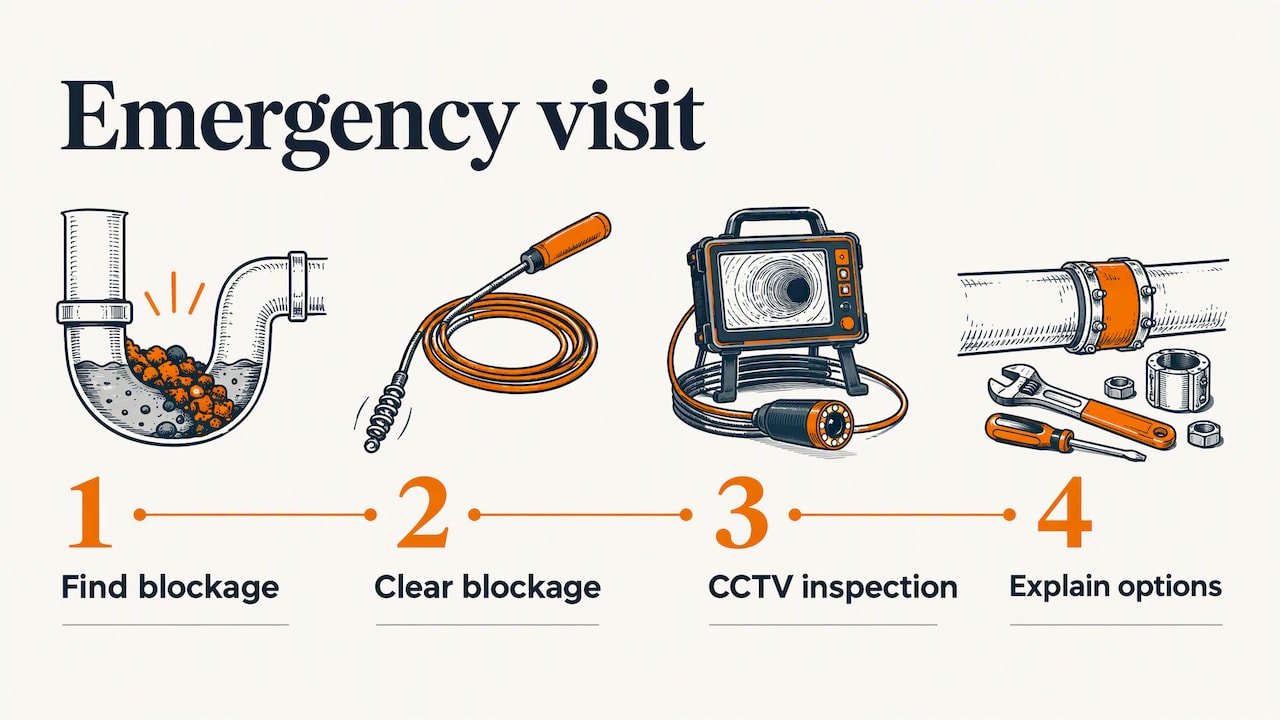
A good visit follows a clear order. Here is what you should expect from us or any competent drainage firm.
1. Find the blockage
The engineer asks what you have noticed, then checks the fixtures, gullies and manholes. Lifting a manhole cover often tells them within minutes whether the blockage is upstream or downstream.
2. Clear it
The method depends on the cause. Rods and plungers deal with simple blockages. For grease, silt, scale or packed-in debris, high-pressure jetting uses water at pressure to scour the pipe walls, not just punch a hole through the blockage. That matters because a pipe that has only been poked through tends to clog again.
3. Look inside with CCTV
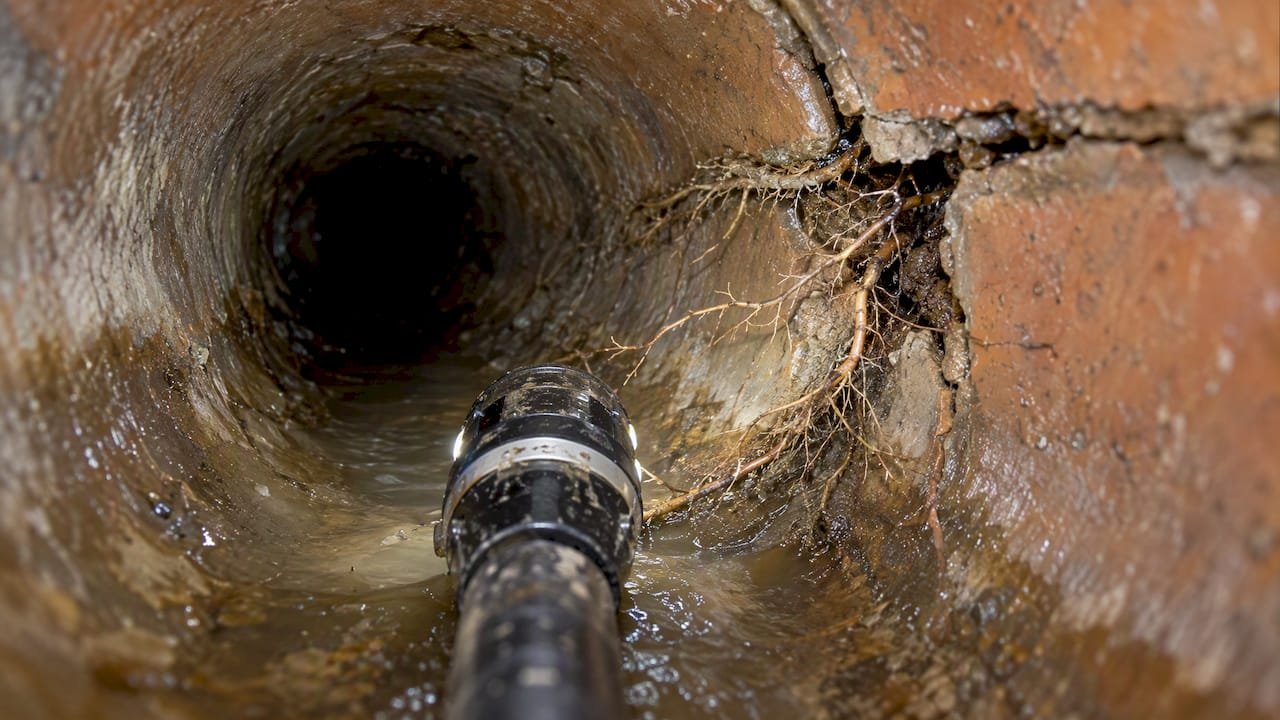
Once water flows, a camera on a flexible rod goes through the pipe. It shows cracks, collapsed sections, displaced joints, tree roots and the build-up that caused the problem. A CCTV drain survey means decisions are based on what is actually underground, rather than guesswork. If the pipe needs work, you see the footage first. That is how we avoid digging where it is not needed.
4. Explain the options
You get a plain explanation: what failed, what the choices are and what each involves. Minor faults may need nothing more than a clean. Others may need a repair. We aim for clear advice with no pressure to decide on the spot.
Common causes we deal with
Most emergency calls trace back to a short list of causes.
- Fat, oil and grease. These cool and solidify in the pipe. Southern Water’s advice is to put them in the bin rather than down the sink.
- Wipes and sanitary items. The same page recommends flushing only the three Ps: pee, poo and toilet paper. Wipes sold as flushable still cause blockages in many homes.
- Tree and shrub roots. Roots enter through joints and cracks, then thicken. If this is the cause, root removal clears them, and the survey shows whether the pipe also needs repairing.
- Damaged or collapsed pipes. Older clay pipes can crack or shift. Debris catches on the damage and the blockage keeps returning.
- Heavy rain. Overloaded drains or gullies clogged with leaves can overflow.
If a blockage returns every few weeks, treat it as a symptom. The pipe itself probably has a fault that a survey will show.
What affects the price
We do not publish fixed prices because every drain is different, and we will not guess a number before we have seen the problem. What you can expect is a clear quote explained before work begins. These factors usually move the cost of any emergency drain job:
- Time of day. Out-of-hours work is usually priced differently from daytime visits, so ask upfront.
- Access. A manhole in a driveway is quicker than a buried or covered inspection chamber.
- Cause and method. A simple blockage differs from a heavily scaled pipe that needs jetting.
- Length and depth of the affected run.
- Follow-up work. A survey, a patch repair or an excavation is a separate decision, made after you have seen the camera footage.
Be wary of anyone who quotes a large repair over the phone without seeing inside the drain. Also check ownership first: if the fault is in a public sewer, you should not be paying a contractor to fix it.
Our perspective
Most people ring us at their worst moment: water is rising, the house smells and the shops are shut. We think the best thing we can do in that moment is be calm, local and honest.
In our experience the biggest cause of unnecessary cost is repairing before diagnosing. A drain that looks collapsed from above may be fine below, and a blockage that looks routine may hide a cracked pipe. That is why we put a camera in first and show you the result. You decide what happens next with the same information we have.
We also tell people when a job is not ours to do. If the evidence points to a public sewer, we say so and point you to the water company, because that saves you a bill.
For landlords and property managers, we would add this: repeated blockages are cheaper to fix once than to clear monthly. A survey after the second callout usually pays for itself.
— Daniel
Emergency drain help across Coventry and Warwickshire
We are based in Coventry and cover Nuneaton, Bedworth, Hinckley and the surrounding areas. We work for homeowners, landlords, property managers and businesses. Our services include blocked drains, blocked toilets and sinks, jetting, root removal, CCTV surveys, home buyer drain surveys and repairs.
If you have a drain problem now, start with our emergency call-out page and call us. Prefer to see what we do first? Our portfolio shows past jobs, and our Nuneaton drainage repairs page covers that area.
Preventing the next emergency
A few habits reduce your risk considerably:
- Bin fats, oils and grease once cooled. Wipe greasy pans with kitchen paper before washing.
- Flush only pee, poo and toilet paper.
- Use a strainer in kitchen sinks and showers.
- Keep gullies and drain covers clear of leaves, especially in autumn.
- Know where your inspection chambers are, and keep them accessible.
- Book a CCTV survey if you are buying a property or you have had repeat blockages. We offer home buyer drain surveys so you know the condition of the drains before you commit.
- Schedule regular jetting for commercial kitchens and busy rental properties.
FAQ
Is a blocked drain an emergency?
It is when sewage is backing up into the house, a toilet will not flush, or a manhole is overflowing. These carry a health risk and can damage your property. A slowly draining sink is usually not urgent and can be booked as a normal visit.
Who pays if the blockage is in the public sewer?
The water company is responsible for public sewers, and since October 2011 in England it is also responsible for shared private sewers and lateral drains. You are responsible for drains that serve only your property. If you are unsure, a CCTV survey can help show where the fault is.
Can I use chemicals to clear it myself?
We would not. Chemical cleaners rarely shift a serious blockage and leave a hazard for whoever works on the drain next. If water is rising or sewage is present, keep people away and call a drainage company.
Will I need to dig up my garden or driveway?
Often not. A CCTV survey shows the exact position and nature of any fault first. Many blockages are cleared with jetting alone, and where repair is needed you can see the footage before deciding.
What should I tell my insurer?
Contact them as soon as you can. Thames Water says insurers may arrange cleaning, replace damaged items and help with accommodation. Take photos, and keep any report from the engineer.
Sources
- Who is responsible for my drains or sewers? (CCW)
- Water customers no longer liable for sewerage repairs (GOV.UK)
- Sewer flooding (Northumbrian Water)
- Private Blockages Code of Practice (Thames Water)
- What to do when you have a blocked drain (Southern Water)
- What to do during sewer flooding (Thames Water)
- Blockages (Northern Ireland Water)
- Customers’ experiences of sewer flooding (Ofwat and CCW)